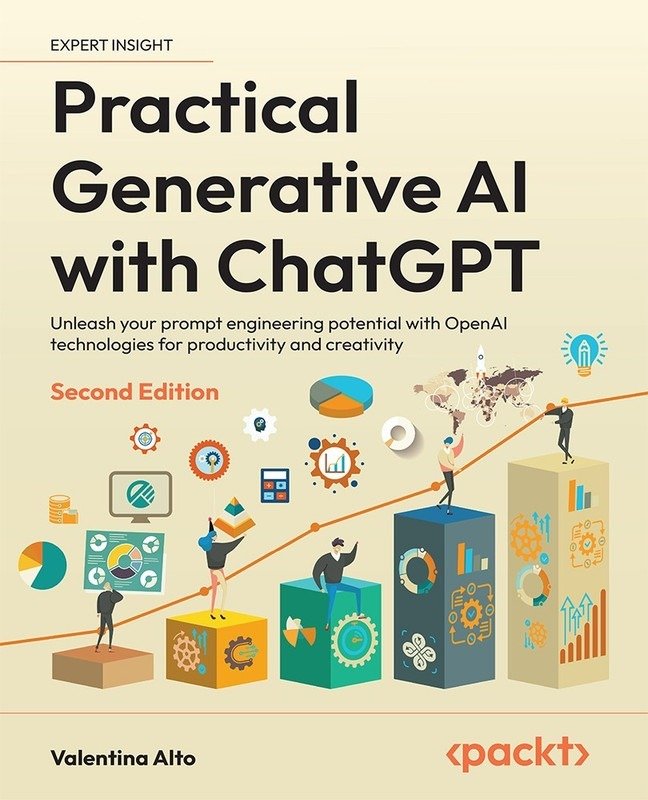
If you're reading this, you've likely felt the tremor: the undeniable shift that generative AI, spearheaded by tools like ChatGPT, is bringing to professional life. It's no longer a futuristic concept whispered in tech labs; it's a powerful co-pilot ready to transform how you work, create, and innovate, right now. The question isn't "if" you'll use it, but "how" to leverage its practical applications to truly enhance your professional capabilities.
Forget the hype for a moment. This isn't about replacing human ingenuity; it's about amplifying it, empowering you to achieve more with less effort, unlock new creative avenues, and make smarter decisions. This guide will cut through the noise, offering a clear, actionable roadmap for professionals across every industry to harness the immense potential of ChatGPT and other generative AI tools.
At a Glance: What You'll Discover
- Mastering the AI Conversation: Learn the secrets of "prompt engineering" to get precise, reliable, and ethical results from AI.
- Your Personal AI Assistant: How to build custom GPTs tailored exactly to your unique business needs and workflows.
- AI for Every Task: Practical strategies to integrate AI into marketing, research, coding, art, and daily productivity.
- Beyond Text: Exploring multimodal AI – from generating stunning images with DALL·E to turning visual concepts into code.
- Enterprise-Level Impact: Understanding how major organizations deploy OpenAI models for advanced applications and strategic AI roadmaps.
- Real-World Readiness: Equip yourself with the skills to confidently navigate the AI landscape, ensuring human oversight and ethical deployment.
Beyond the Buzz: What Generative AI Really Means for You
Before we dive into the "how-to," let's quickly align on what we're actually talking about. When we discuss "Practical Applications of ChatGPT and Generative AI," we're not just talking about a chatbot that answers questions. We're talking about a family of artificial intelligence models capable of generating novel content – text, images, code, audio, and more – based on patterns learned from vast datasets.
These models, like OpenAI's GPT series, don't just regurgitate information; they create it. This ability to generate, rather than just retrieve, is what makes them truly transformative for professionals. If you're curious about the underlying mechanisms, it’s worth understanding Is ChatGPT Generative AI? and how these powerful models work. They are designed to understand context, follow instructions, and produce output that often feels indistinguishable from human-created content.
The core promise here is efficiency, innovation, and enhanced creativity. Whether you're a marketer looking for fresh campaign ideas, a developer seeking coding assistance, a researcher sifting through mountains of data, or a business leader crafting strategic plans, generative AI offers tools that were unimaginable just a few years ago.
Mastering the AI Conversation: The Art of Prompt Engineering
Think of generative AI as an incredibly intelligent but literal intern. It needs clear, precise instructions to perform optimally. This is where prompt engineering comes in – it’s the skill of crafting effective commands or "prompts" to elicit the desired output from an AI model. This isn't just about asking a question; it's about setting context, defining roles, specifying formats, and guiding the AI towards excellence.
Why Prompt Engineering is Your Superpower
Consistently obtaining relevant, reliable, and ethical AI-powered results isn't magic; it's a direct outcome of skillful prompting. A poorly constructed prompt yields generic, unhelpful, or even inaccurate information. A well-engineered prompt, however, can unlock profound insights, generate high-quality content, and streamline complex tasks.
Key Principles of Effective Prompting:
- Be Explicit and Detailed: Don't assume the AI knows what you mean. Specify the task, the goal, the target audience, the tone, and any constraints.
- Bad Prompt: "Write about marketing."
- Good Prompt: "Act as a senior marketing strategist. Draft a 300-word blog post for small business owners on the benefits of adopting a content marketing strategy, using a friendly, encouraging tone. Include a clear call to action to start blogging."
- Define the AI's Role: Give the AI a persona. This helps it adopt the right perspective and tone.
- Example: "You are a legal expert specializing in intellectual property. Explain copyright law to a startup founder in simple terms."
- Provide Context and Examples: If you have specific data points, a particular style, or an example of desired output, include it. "Few-shot prompting" (giving a few examples) can significantly improve results.
- Specify Output Format: Tell the AI how you want the answer structured (e.g., bullet points, a table, a JSON object, a 5-paragraph essay).
- Example: "Summarize the following research paper into three bullet points, each no longer than 20 words."
- Iterate and Refine: Your first prompt might not be perfect. View it as a conversation. Ask follow-up questions, request revisions, and provide feedback to steer the AI. "Refine this. Make it more concise and add a touch of humor."
- Consider Ethical Guardrails: When dealing with sensitive topics, explicitly instruct the AI to adhere to ethical guidelines, avoid bias, and ensure factual accuracy where possible.
By mastering these techniques, you move from passively using AI to actively directing it, ensuring the output aligns perfectly with your professional standards and objectives.
Tailoring AI to Your Workflow: Building Custom GPTs and AI Assistants
While general-purpose AI models are incredibly versatile, their true power for professionals often lies in customization. Imagine an AI assistant specifically trained on your company's knowledge base, understanding your internal jargon, and automating tasks unique to your role. This is the promise of custom GPTs and AI assistants.
OpenAI's Custom GPTs feature, for example, allows you to create specialized versions of ChatGPT that are tailored to specific business needs and workflows. You can provide them with custom instructions, additional knowledge (documents, spreadsheets), and even define actions they can perform (like interacting with external tools via APIs).
How Custom GPTs Elevate Your Productivity
- Hyper-Specialization: Instead of repeatedly giving context, a custom GPT already knows its domain. A "Marketing Campaign Generator GPT" could be pre-loaded with your brand guidelines, target demographics, and past successful campaigns.
- Streamlined Processes: Automate multi-step tasks. A "Customer Service Inquiry GPT" could analyze incoming emails, draft empathetic responses, and even look up relevant FAQs from your internal documentation.
- Enhanced Data Security (within limits): By connecting to your specific knowledge base, you control what information the AI has access to, rather than relying on its general training data.
- Consistent Output: Ensure all AI-generated content adheres to specific styles, tones, and factual bases relevant to your organization.
Building Your Own AI Sidekick (A Simplified View)
Creating a custom GPT is surprisingly user-friendly. You typically define:
- Purpose & Persona: What is this GPT for? What role should it play? (e.g., "This GPT is a professional resume editor.")
- Instructions: Detailed guidelines on how it should operate, its limitations, and its communication style. (e.g., "Review resumes for clarity, conciseness, and ATS optimization. Focus on action verbs and quantifiable achievements.")
- Knowledge Base (Optional): Upload specific documents, like company handbooks, style guides, product manuals, or research papers. The GPT will reference these first.
- Capabilities/Actions (Optional): Configure it to browse the web, generate images (DALL·E), or call external APIs (e.g., to update a CRM or send an email).
For developers and those with more technical needs, integrating OpenAI's APIs directly into applications offers even greater flexibility, allowing you to design sophisticated AI applications that fit seamlessly into existing software ecosystems. This opens doors to creating bespoke semantic search tools or intelligent process automation specific to enterprise solutions.
AI in Action: Transforming Daily Professional Tasks
The real value of generative AI comes alive when integrated into your everyday responsibilities. Let's explore specific practical applications across various professional domains.
For Marketers: Strategies, Content, and Insights
Generative AI is a game-changer for marketing, offering tools to enhance creativity, optimize campaigns, and personalize outreach.
- Content Generation: From blog posts and social media updates to email newsletters and ad copy, AI can draft compelling content in minutes. You can instruct it to generate variations for different platforms or audiences, saving immense time.
- Example: "Generate five unique headlines for a new product launch email campaign targeting tech enthusiasts, emphasizing innovation and efficiency."
- Marketing Strategy Development: Use AI to brainstorm campaign ideas, analyze market trends, or even help segment your audience. It can act as a strategic sounding board.
- A/B Testing Assistance: AI can generate multiple versions of ad copy, landing page text, or email subject lines, which you can then A/B test to find the highest-performing options. It can also help analyze test results and suggest improvements.
- Persona Creation: Develop detailed buyer personas, complete with demographics, psychographics, and pain points, by prompting AI with market research data.
For Researchers: Knowledge Mining and Data Synthesis
The ability of AI to process vast amounts of information swiftly is invaluable for researchers across all fields.
- Real-time Knowledge Mining: Quickly extract key information, identify trends, and summarize complex research papers or datasets. Instead of hours sifting through reports, AI can provide a distilled overview.
- Example: "Summarize the key findings and methodologies of the top five research papers published on CRISPR gene editing in the last year."
- Hypothesis Generation: Use AI to brainstorm potential research questions or hypotheses based on existing literature and data.
- Data Analysis & Interpretation: While not a substitute for statistical rigor, AI can help interpret qualitative data, identify patterns in text-based information, or explain complex analytical concepts.
- Literature Reviews: AI can help compile and synthesize information from numerous sources, providing a structured overview for literature reviews.
For Developers: Boosting Code Generation, Review, and Optimization
Developers are finding generative AI to be a powerful co-pilot, not just for writing code, but for understanding, debugging, and optimizing it.
- Code Generation: Generate code snippets, functions, or even entire scripts in various programming languages based on natural language descriptions.
- Example: "Write a Python function that connects to a PostgreSQL database, retrieves data from a 'users' table, and returns it as a Pandas DataFrame."
- Code Review and Explanation: Ask AI to review your code for potential bugs, inefficiencies, or adherence to best practices. It can also explain complex code sections or unfamiliar libraries.
- Debugging Assistance: Paste error messages or problematic code into AI and ask for potential solutions or explanations.
- Code Optimization: Request suggestions to refactor code for better performance, readability, or maintainability.
- Transforming Images into Code: Advanced multimodal capabilities allow AI to interpret a visual design (like a sketch of a UI) and generate the corresponding HTML, CSS, or even UI framework code. This bridges the gap between design and development.
For Creatives & Designers: Visual Storytelling and Idea Generation
Generative AI's multimodal capabilities extend far beyond text, opening new frontiers for visual creativity.
- Image Generation with DALL·E: Describe an image you envision, and AI can generate it. This is revolutionary for creating unique visuals for marketing, presentations, storyboarding, or conceptual art.
- Example: "Generate a photorealistic image of a futuristic cityscape at sunset, with flying cars and neon lights, in the style of cyberpunk art."
- Image Understanding and Editing: AI can analyze images, describe their content, identify objects, or even perform style transfer – applying the artistic style of one image to another.
- Visual Brainstorming: Quickly generate multiple visual concepts or mood boards based on textual descriptions, accelerating the ideation phase of any creative project.
- Style Transfer: Apply the artistic characteristics of a famous painting or a specific aesthetic to your own images, creating unique visual blends.
For Personal Productivity: Summarization, Brainstorming, and Planning
Even outside specific professional roles, AI can dramatically boost individual productivity.
- Summarization: Condense long emails, articles, meeting transcripts, or reports into concise summaries, saving you time and ensuring you grasp key points.
- Brainstorming: Overcome creative blocks by asking AI to generate ideas for presentations, project plans, problem-solving approaches, or even daily tasks.
- Drafting Communications: Quickly draft professional emails, memos, or meeting agendas, freeing up mental energy for higher-level tasks.
- Learning & Skill Development: Use AI as a personalized tutor to explain complex concepts, provide examples, or generate practice questions on any topic.
Unlocking Deeper Integration: OpenAI APIs and Enterprise Applications
While interacting directly with tools like ChatGPT is powerful, the full potential of generative AI for organizations often lies in integrating OpenAI's Application Programming Interfaces (APIs) directly into existing software and workflows. This moves beyond simple chat interfaces to creating truly intelligent applications.
Beyond the Chat Interface: API Integration
OpenAI's APIs allow developers to programmatically access the underlying models (like GPT-4, DALL·E, etc.) and embed their capabilities into custom applications.
- Custom Application Development: Build your own AI-powered tools tailored exactly to your unique business needs, without the constraints of a pre-built interface. This could be an internal knowledge base that answers employee questions instantly, a smart content moderation system, or a personalized recommendation engine.
- Workflow Automation: Integrate AI into your existing CRM, ERP, or project management systems. Imagine a system that automatically generates sales reports, categorizes customer feedback, or drafts project updates based on activity logs.
- Scalability: APIs allow for higher volume processing and integration into complex IT infrastructures, making them ideal for enterprise-level deployment.
How Enterprises Utilize OpenAI Models
Leading organizations are already leveraging generative AI for sophisticated applications:
- Semantic Search: Move beyond keyword matching. AI-powered semantic search understands the meaning and intent behind a query, delivering far more relevant results from vast internal databases, research archives, or customer support knowledge bases. This significantly enhances knowledge discovery and decision-making.
- Automated Customer Support: Deploy AI models to power chatbots that can handle a wider range of customer inquiries, provide more nuanced answers, and even escalate complex cases to human agents seamlessly.
- Personalized Experiences: From e-commerce recommendations to tailored learning paths in educational platforms, AI can analyze individual user behavior and preferences to deliver highly personalized content and services.
- Internal Knowledge Management: Create AI systems that can instantly answer questions about company policies, product specifications, or internal procedures, reducing the time employees spend searching for information.
- Developing AI Roadmaps: Businesses are creating strategic plans to systematically identify areas where AI can drive significant value, from proof-of-concept projects to full-scale enterprise AI adoption. This involves assessing current workflows, identifying pain points, and mapping AI solutions to business objectives.
Integrating these technologies requires not just technical expertise but also a clear understanding of business needs and a strategic vision for AI deployment. It's about building intelligent infrastructure that supports innovation and operational excellence.
Addressing Common Misconceptions & Best Practices
As with any powerful technology, generative AI comes with its own set of nuances and potential pitfalls. Professionals must navigate these with awareness and ethical considerations.
AI Isn't a Silver Bullet
While incredibly capable, generative AI is a tool, not a sentient being. It doesn't possess true understanding, consciousness, or common sense in the human sense. It excels at pattern recognition and content generation based on its training data. It can't magically solve all your business problems or think critically in a way that transcends its programming.
Human Oversight is Key
Never delegate critical decision-making or the final review of content solely to AI. Always treat AI output as a draft, a suggestion, or a starting point. Humans must provide the judgment, context, ethical reasoning, and accuracy checks. This is especially true for sensitive fields like legal, medical, or financial advice.
Data Privacy and Security
When using AI tools, especially with proprietary or sensitive information, be acutely aware of data privacy and security policies. Understand how your data is used by the AI provider. For enterprise solutions, deploying models on secure, private infrastructure or leveraging features designed for data isolation becomes paramount. Always check terms of service and consider regulatory compliance (e.g., GDPR, HIPAA).
Mitigating Bias and Hallucinations
Generative AI models learn from vast datasets, which often reflect existing societal biases. This means AI output can sometimes perpetuate or amplify those biases. Similarly, AI can "hallucinate," presenting false information as fact, especially when prompted for information outside its training data or when it struggles to find a direct answer.
- Best Practice: Actively scrutinize AI outputs for bias and factual accuracy. Cross-reference information with reliable sources. When building custom GPTs or integrating APIs, consider implementing guardrails and fine-tuning with diverse, unbiased data.
Ethical AI Use
The power of generative AI demands ethical responsibility. This includes:
- Transparency: Be transparent when content is AI-generated, especially in public-facing communications.
- Fairness: Ensure AI is used in a way that promotes fairness and avoids discrimination.
- Accountability: Ultimately, humans are accountable for the actions and impacts of AI systems.
- Intellectual Property: Understand the implications for copyright and ownership when generating content or using AI for creative works.
By adopting a thoughtful, critical, and ethical approach, you can harness the immense benefits of generative AI while mitigating its risks.
Your Next Move: Building Your AI-Powered Future
The landscape of generative AI is evolving at an unprecedented pace, but the fundamental principle for professionals remains constant: adopt, adapt, and innovate. The practical applications of ChatGPT and other generative AI tools are not just fleeting trends; they are foundational shifts in how work gets done.
Start small. Experiment with prompt engineering in your daily tasks. Identify one repetitive workflow where AI could lend a hand. Explore building a simple custom GPT for a specific project. For developers, begin with API integration in a contained environment.
The goal isn't to become an AI expert overnight, but to become an AI-empowered professional. By continually learning, experimenting, and critically evaluating these tools, you won't just keep pace with the future of work – you'll be actively shaping it. Embrace this shift, and you'll find yourself unlocking new levels of productivity, creativity, and strategic insight, transforming challenges into opportunities. Your AI-powered future starts now.